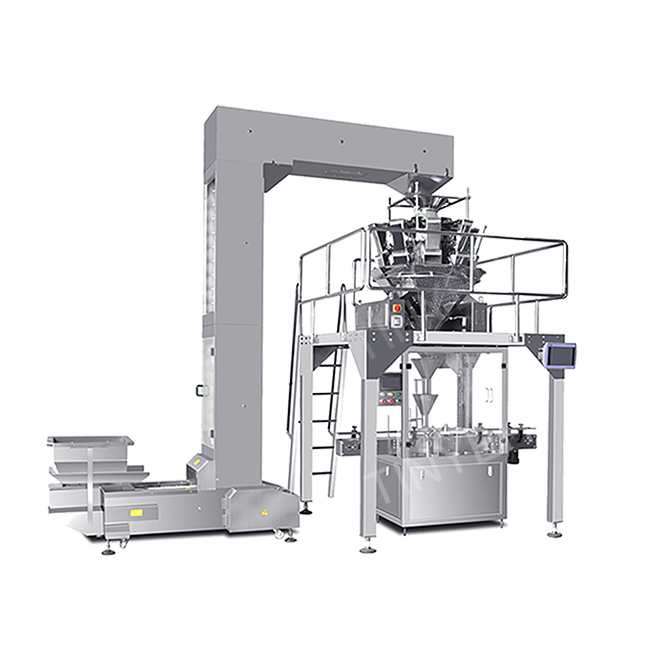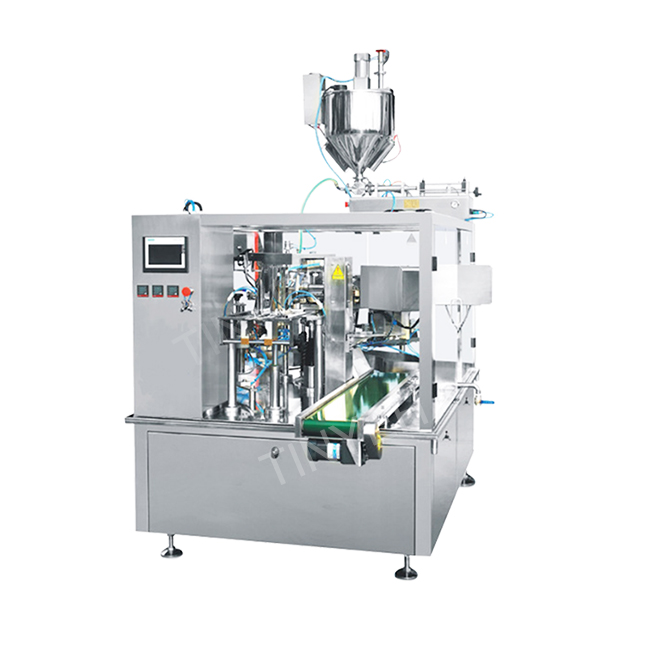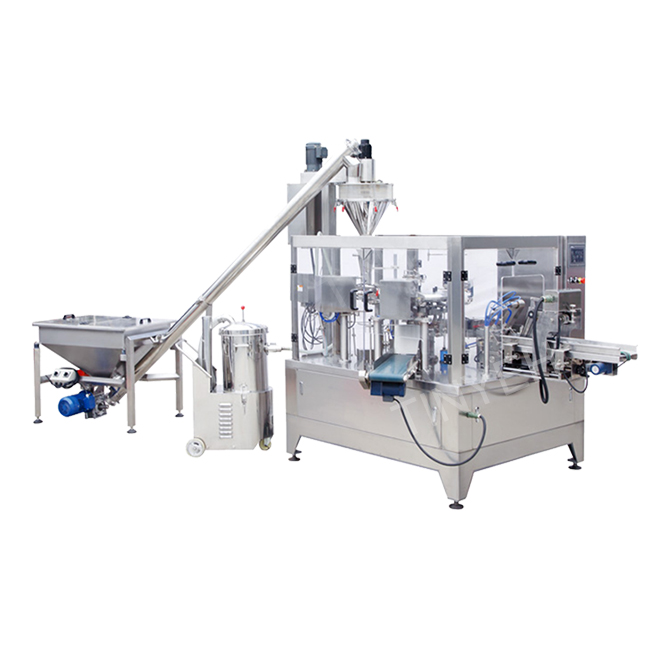


A vertical packaging machine is an automated system designed to produce flexible film bags from a flat roll of material, fill them with a product, and seal them—all in a continuous vertical motion. The "Form Fill Seal" (FFS) designation perfectly describes its three core functions: forming the bag, filling it with the product, and sealing it shut.
How It Works: The Core Process
The operation of a VFFS machine is a marvel of synchronized engineering, typically following these steps:
-
Film Feeding: A flat roll of packaging film is fed into the machine via a tensioning system.
-
Forming: The film is pulled over a "forming shoulder," which shapes it into a vertical tube around the product fill tube.
-
Vertical Sealing: A vertical heat sealer seals the overlapping edges of the film, creating a continuous tube or "lap seal" (or a "fin seal" depending on the configuration).
-
Filling: The product is dosed and dropped through the fill tube into the newly formed tube of film.
-
Cross Sealing & Cutting: Jaw assemblies crimp and heat-seal the tube horizontally to close the top of the filled bag and the bottom of the next bag simultaneously. A built-in cutter separates the finished bag from the tube.
-
Discharge: The completed, sealed bag is discharged onto a conveyor for check-weighing or secondary packaging.
Key Applications and Versatility
One of the greatest strengths of the vertical packaging machine is its adaptability. It serves a vast range of industries:
-
Food Industry: Perfect for packaging snacks, candies, coffee beans, frozen vegetables, rice, and pet food.
-
Powders and Granules: Ideal for packaging milk powder, flour, sugar, detergent, and seasoning mixes. (Often paired with specialized auger fillers).
-
Liquids and Pastes: Capable of handling sauces, shampoos, oils, and liquid beverages when equipped with liquid filling systems.
-
Hardware: Used for packaging components like screws, nuts, bolts, and fittings.
Advantages of VFFS Technology
Businesses choose vertical packaging machines for several compelling reasons:
-
High Speed and Efficiency: These machines can operate at high speeds, producing dozens of bags per minute, which significantly increases production throughput.
-
Space Saving Design: The vertical footprint requires minimal floor space compared to horizontal packaging systems, making them ideal for compact production facilities.
-
Reduced Labor Costs: The automated process minimizes the need for manual intervention, reducing labor costs and the risk of contamination.
-
Material Flexibility: They are compatible with various film materials, including laminates, polyethylene, and biodegradable films.
-
Bag Style Variety: Modern VFFS machines can produce a variety of bag styles, including pillow pouches, gusseted bags, and block-bottom bags, allowing brands to customize their presentation.
Features of Modern Machines
Today’s vertical packaging machines are equipped with advanced technology to ensure precision and ease of use. Servo-driven motors provide accurate film feeding and sealing pressure. Human-Machine Interface (HMI) touchscreens allow operators to easily adjust bag length, sealing temperature, and production speed. Furthermore, integration with multi-head weighers or auger fillers ensures precise product dosing, minimizing waste and ensuring customer satisfaction.