

How It Works: Precision from Hopper to Bag
A vertical powder packaging machine is a form-fill-seal (FFS) system designed specifically for free-flowing and semi-free-flowing powders. Its operation is a marvel of coordinated automation:
-
Film Feeding & Bag Forming: A roll of packaging film (typically multi-layer polypropylene or polyethylene for moisture and barrier protection) is mounted on the machine. The film is drawn upward, formed into a tube around a vertical filling tube (the "forming tube"), and the longitudinal seal is created.
-
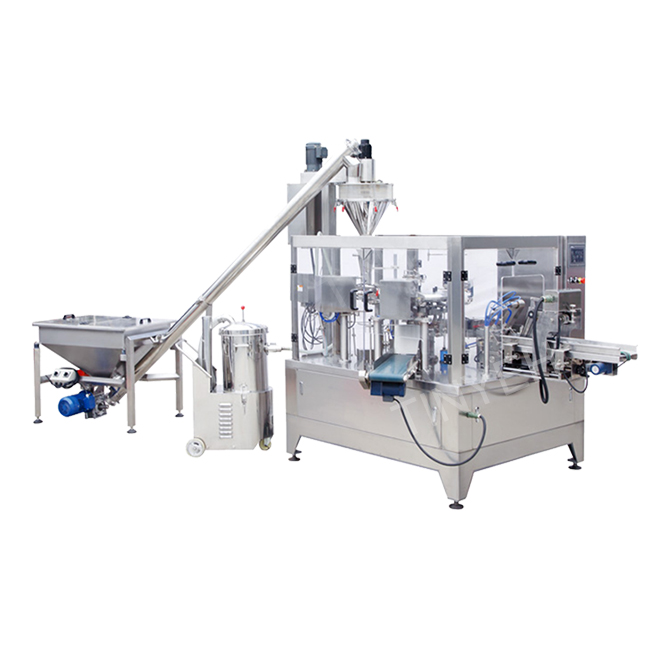
Weighing and Filling: This is the core of the powder packager. Flour is fed from a bulk hopper into the machine's precision weighing system. The most common and accurate method for powders is the auger filler. A rotating auger (screw) inside a chamber meters out a precise volume of flour. The machine's computer controls the auger's rotation, often using a two-stage (fast-fill and fine-tune) approach to achieve remarkable weight accuracy, crucial for meeting regulatory standards and controlling costs.
-
Dust Control: A critical feature for flour. The forming tube often incorporates dust extraction ports that suction away airborne particles during filling, keeping the bag seal area clean and the working environment dust-free. This ensures a strong, hygienic seal and improves operator safety.
-
Sealing and Cutting: Once the preset weight is dispensed, horizontal jaws seal the top of the filled bag and simultaneously cut it away from the tube of film below, creating the bottom seal for the next bag. This creates pillow-style bags with sealed, clean edges.
-
Discharge: The finished bag is then conveyed away for boxing, palletizing, or distribution.
Key Advantages for Flour Packaging
-
High Speed and Efficiency: Modern vertical packagers can produce dozens of bags per minute, far outpacing manual filling and significantly boosting production line output.
-
Superior Weight Accuracy: Advanced auger systems with servo motors ensure consistent fill weights, reducing product giveaway and ensuring compliance.
-
Enhanced Hygiene: The closed system minimizes human contact with the product. Stainless steel contact parts and easy-clean designs meet stringent food safety standards (like FDA, GMP).
-
Dust Suppression: Integrated dust removal systems protect the product from waste, maintain machine cleanliness, and contribute to a safer workplace by reducing explosive dust clouds.
-
Flexibility: These machines can handle a wide range of bag sizes, from small 1kg retail bags to larger 5kg or 10kg units, with quick changeover. They can also print date codes, batch numbers, or other information via an integrated printer.
-
Reduced Labor and Waste: Automation minimizes the need for manual operators and reduces packaging material waste through precise film control.
Considerations for Flour
While ideal, packaging flour requires attention to certain machine specifications:
-
Auger Design: The auger and filling tube must be smooth and designed to prevent flour from packing or bridging.
-
Film Compatibility: The packaging film must have excellent barrier properties to protect flour from moisture and rancidity.
-
Regular Maintenance: Consistent cleaning and maintenance of the filling system are essential to prevent cross-contamination and ensure consistent operation